Funny Images for the Color Purple
The Untold Truth Of The Colour Majestic
Warner Bros. Pictures
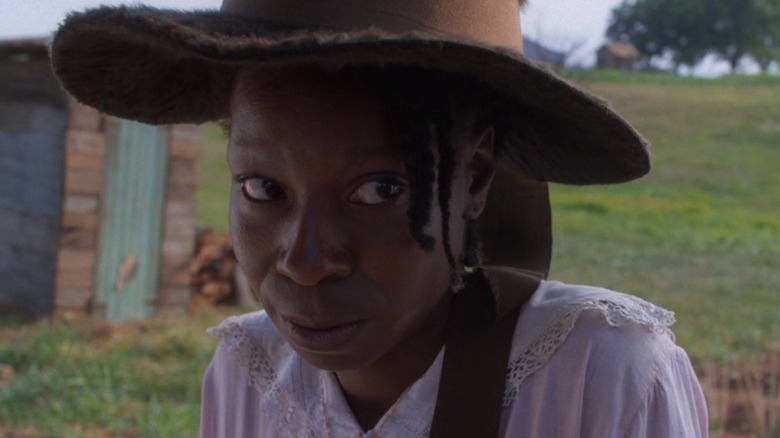
When "The Color Regal" debuted in Los Angeles in 1985, the earth had never seen anything quite like it. Adjusted from Alice Walker's third novel, information technology tells the story of Celie, a immature Blackness girl growing up in early 20th century America. The pic doesn't flinch at topics that make folks uncomfortable, and that won the movie both critical praise likewise as horrified condemnation.
I thing anybody could agree on, though, was its success. The motion picture took in near $100 million in domestic ticket sales. In 2005, information technology was fabricated into a Broadway musical, which is now beingness turned back into a motion picture. As exciting every bit that is, the original movie will always remain a classic, and the stories of its cosmos are just as gripping as the picture itself. And how could they not be?
"The Color Purple" was helmed past three of the greatest creative minds out there — Walker, executive producer and composer Quincy Jones, and director Steven Spielberg. Information technology introduced us to now-household names like Oprah Winfrey, Whoopi Goldberg, and Danny Glover. In that location's centre, there's humor, there'south pain and sacrifice. The behind-the-scenes tales tin can assist you examine the pic on a whole new level as yous await at what was and what could have been. And then, to deepen your appreciation of ane of the about important movies of the 20th century, here's the untold truth of "The Color Purple."
The motion picture wouldn't exist without Quincy Jones
Sam Aronov/Shutterstock
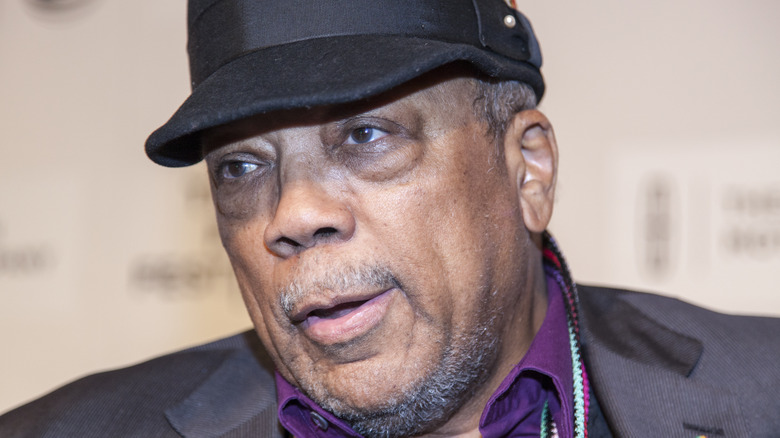
In many ways, we can thank the film's executive producer and composer — the legendary Quincy Jones — for making "The Color Purple" a reality. He championed it when no 1 else did. Oprah Winfrey asked him how he knew it would piece of work as a movie during the film's 25th anniversary reunion on her evidence. Quincy responded past pointing to his center.
"Everybody in town was saying, 'Quincy Jones is out of his listen,'" he said of his quest to convince Steven Spielberg to straight. "He thinks he's going to go the greatest manager in the world on his showtime movie. That'south when I found the ability of being underestimated." He convinced Spielberg to take on the project, but that was only half the battle. The other half was convincing Alice Walker to not just give him the rights for the flick, but to also hold to Spielberg every bit the managing director.
Walker, though, had never even heard of Steven Spielberg before. But and so, equally she explained to Commonwealth Now!, she went to meet "E.T." with her daughter and loved it. In her memoir, "The Same River Twice: Honoring the Difficult," Walker shares her journal entry of their first meeting: "Quincy had talked and then positively well-nigh [Spielberg] I was almost dreading his advent." Still, he apace won her over with his enthusiasm, so past the end of the meeting, she'd agreed to write the screenplay with Spielberg. The motion-picture show was a get.
Alice Walker submitted a screenplay with two unlike titles
Jenny Anderson/Getty Images
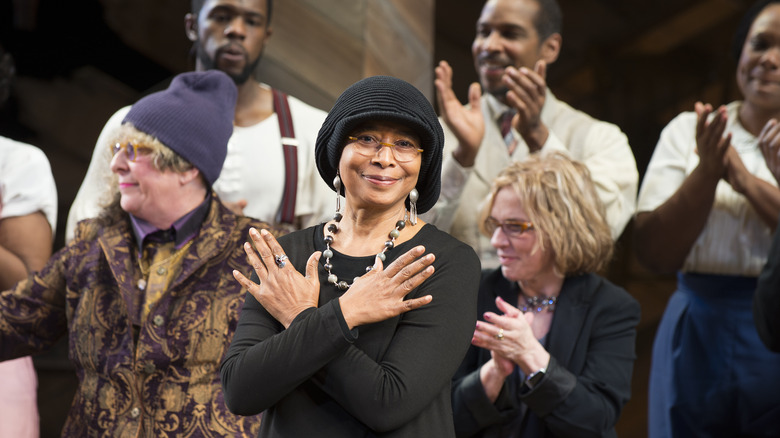
While Alice Walker was convinced that Steven Spielberg was the man to bring her movie to life, she still had a difficult fourth dimension trusting that it would turn out properly. And really, information technology was understandable for her to incertitude that a white director could fully sympathise and appreciate a Black historical epic like "The Colour Purple" enough to properly translate information technology to the large screen.
As she writes in "The Same River Twice: Honoring the Difficult," she wrote the screenplay with 2 titles: "The Color Purple" and "Sentry for Me in the Sunset." "Some part of me was afraid that no matter how good his intentions," she confesses, "Steven's version of 'The Color Majestic' would not deserve the proper name. And and then I created an alternative title for his flick."
While she ultimately went with her book'southward name for the film, Walker never quite shook the feeling that the picture was not fully telling the story she wrote. As she told NBC News for the film's 30th ceremony, she preferred the 2005 musical version to the flick because information technology better reflected the entirety of "The Color Purple" story. "I think the musical gives people a more impactful feel of the relationship between Celie and Shug," she explained, "which is better developed than in the picture show."
Whoopi Goldberg has Black E.T. to thank for her role
HBO
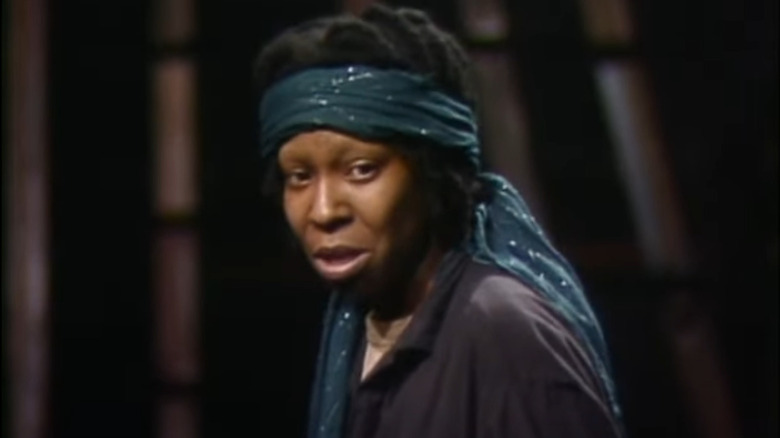
By at present, Whoopi Goldberg has washed it all — movie star, Television set actor, and talk evidence host — simply believe it or not, "The Color Purple" was her offset leading pic part. Dorsum so, she was a theater extra and comedian with a successful and hilarious i-woman Broadway show. As Goldberg told Jimmy Fallon on "The Tonight Show," when the folks making "The Color Purple" got current of air of her show, Steven Spielberg asked her to audition at his own theater in Amblin Studios. There, she performed in front of a Who'south Who of celebrities, including Michael Jackson and Quincy Jones.
The comedian did a few bits from her show, and everyone loved information technology, so Spielberg asked if she had more fabric. Goldberg said, "Yep, just I'yard not sure you're gonna like it. It's about BlE.T ... It's the Black E.T. and he lands in Oakland. And he's in the projects with the kids." Information technology's the one skit her squad had told her not to do, simply Spielberg replied, "I need to meet this."
She performed the bit and thankfully, Spielberg loved it. But more importantly, as Goldberg told Fallon, "He understood why I was writing it. [E.T.] needed to remember who he was and where he came from." The filmmaker was so impressed with Goldberg that she ended up getting the lead role. "Listen, information technology's neat to take a good origin story," she quipped to Fallon.
Oprah and Whoopi auditioned for the aforementioned role
OWN
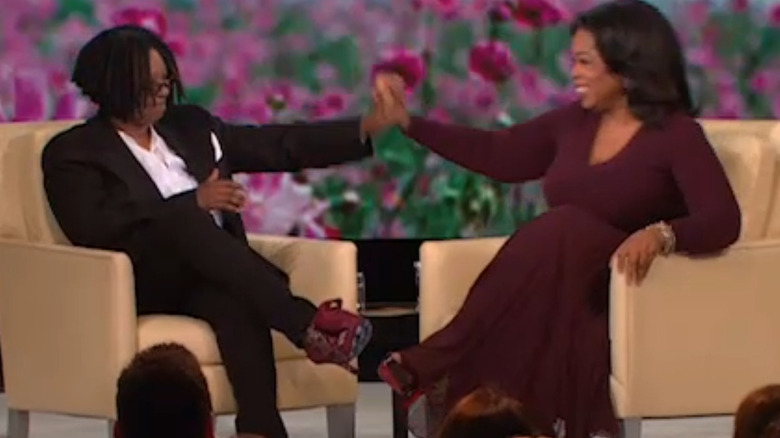
Both Whoopi Goldberg and Oprah Winfrey were huge fans of "The Color Majestic" novel, and they each wanted the same role. Information technology wasn't the lead, though; according to ABC News, they both tried out for Sofia, just Oprah was the 1 who got information technology. "I just became obsessed with beingness a role of this movie," Oprah noted in the 2010 reunion on her prove. "And it was, I believe, divine order, fate, that made it possible."
Goldberg explained in a Masterclass interview that she was such a big fan of "The Color Purple" that she wrote to Alice Walker, maxim that if they ever made a movie of the volume, she'd be willing to "play dirt on the flooring" just to exist a part of it. Information technology turned out Walker was as well a fan of Goldberg and in fact, was the 1 to bring her to Spielberg's attention.
The comedian had impressed Spielberg and Jones and so much during her audition that instead of offering her Sofia, they asked her to play Celie. Merely Goldberg didn't want to be the star. "I never fabricated a pic before," she told Winfrey in the reunion. "I didn't know how this thing worked, and if I messed it up, I didn't want to get in problem." It took some work on Spielberg's part to convince her that she was upward to the chore. But convince her he did, and with Sofia and Celie in place, motion picture history was about to be made.
Oprah nearly lost the part
Warner Bros. Pictures
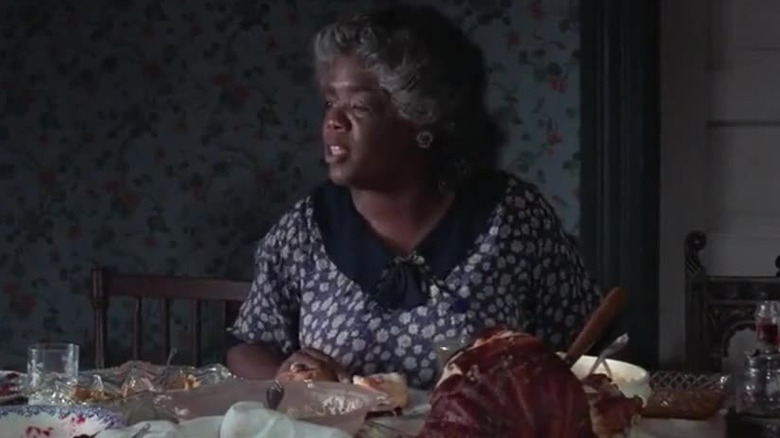
After auditioning for Sofia, Oprah went off on something of a spiritual journey. She described the events at Essence Fest: Three months had passed since trying out for "The Color Purple," and she got so tired of waiting that she called the casting director herself (via EW). He blew up at her for breaking "Hollywood protocol" (i.e. not waiting for his call), and after hanging upwards, Winfrey bankrupt down. Convinced that she'd lose out on the role because of her weight, the television receiver host went off to a "fat farm" to shed 25 pounds.
One day, she was jogging in the rain, feeling down-hearted and similar she was at the stop of her rope. She of a sudden felt moved to break out into the church hymn, "I Give up All." At that moment, someone ran upwardly to tell her that someone named Spielberg was on the telephone for her. "[Steven] says, 'I hear yous are on a fat farm,'" Oprah recalled. She replied, "'No sir, this is a health retreat.' He says, 'I'd like to encounter you in my office in California and if yous lose a pound yous could lose this part.'" That was all the soonhoped-for-actress needed to hear. "I packed my numberless," she declared. "I stopped at the Dairy Queen — three scoops just in case I lost one-half a pound. Next day, I was in Spielberg'south office and he said, 'You're hired.'"
Alice Walker hated the movie at first
Warner Bros. Pictures
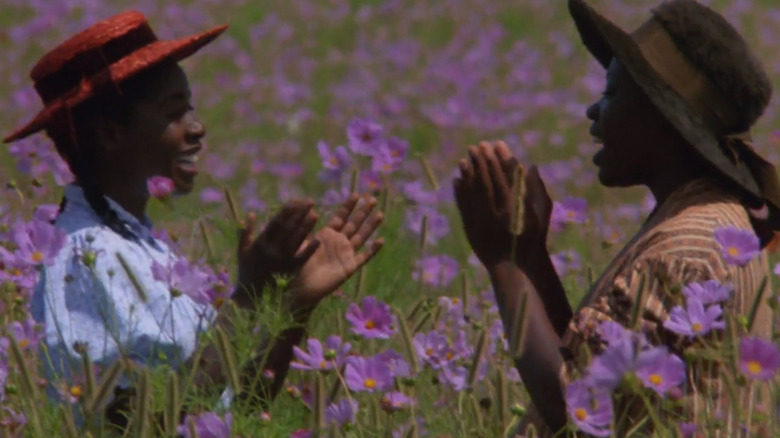
When the film was finally completed, Alice Walker had a difficult time warming up to it. All of her misgivings seemed to have been proven true. She was on ready nearly every day, only, every bit she admitted in "The Aforementioned River Twice: Honoring the Difficult," she didn't e'er experience comfortable or upward to the task of pointing out the "errors" she saw existence made.
When she saw the motion-picture show for the first time in a nigh empty theater with just two other people, she felt that "everything most it seemed wrong, specially the opening musical score, which sounded like it belonged in 'Oklahoma.'" Merely then she attended the movie'south New York premiere in a packed theater full of "enthusiastic viewers all sobbing and guffawing in my ear, and I was able to critique the moving picture for its virtues rather than its flaws."
After that moment, although she came to appreciate its virtues, her feelings about "The Color Majestic" movie remained complicated. Whenever she's been asked almost it over the years, she says she often switches betwixt "I loved it" to "I have mixed feelings." Over time, though, her favorite response became, "The movie is not the volume." It'due south a familiar refrain yous'll hear from near every volume-lover who's seen their favorite novel translated to screen. The cinematic interpretation can almost never live up to the original, especially with a story equally complex and deep as "The Color Purple."
Steven Spielberg removed Celie and Shug'southward relationship
Warner Bros. Pictures
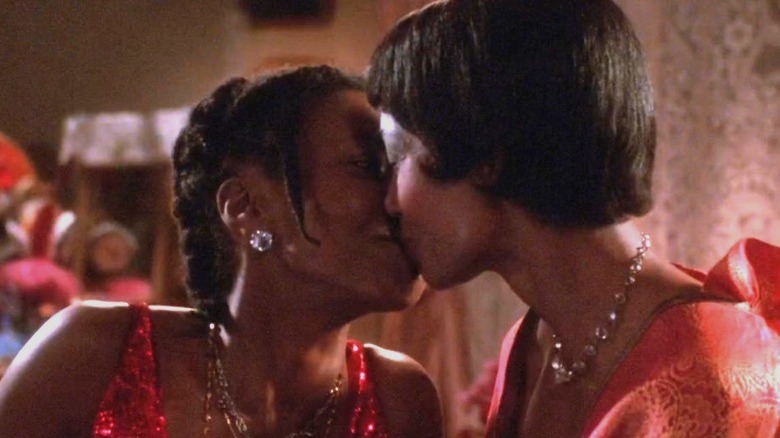
Ane of Alice Walker'south (and fans') biggest criticisms of the motion picture is how much information technology toned downwardly the romantic relationship between Celie and Shug. And by toned it downward, nosotros mean reduced it to a single buss. Their relationship is a huge part of the novel, but the film barely even hints at it. Its loss is part of the reason that Walker prefers Oprah's musical to Steven Spielberg'due south movie.
Cutting this significant relationship down was Spielberg's decision. Well enlightened of the controversy over the years, when he spoke with Entertainment Weekly back in 2011, he was candid in albeit that he "was the incorrect manager" to handle the lesbian relationship. He didn't recollect that including more than that kiss would allow them to get a PG-13 rating, so he scrapped information technology all. "I was shy about it," he said near the sexuality in the novel. "I basically took something that was extremely erotic and very intentional, and I reduced it to a simple osculation. I got a lot of criticism for that."
But that doesn't mean he would modify a thing. When asked if he'd handle the human relationship differently these days, he held his footing. "I wouldn't, no," he insisted. "That osculation is consistent with the tonality, from beginning to stop, of 'The Color Purple' that I adjusted."
The picture was criticized for its portrayal of Black men
Warner Bros. Pictures
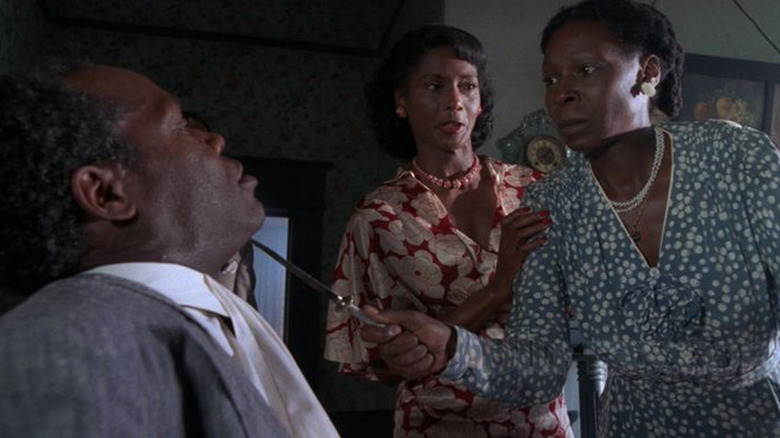
Though many now hail the film a archetype, when "The Color Purple" was first released, some people hated information technology because of how they felt Black men were portrayed. It was an accusation Alice Walker had already endured after the publication of her book, merely the attacks grew worse subsequently the motion picture was released, every bit Walker was thrust into the public calorie-free in a new way. Fifty-fifty members of the NAACP protested the pic.
Walker writes in her volume well-nigh the making of the moving picture, "The Aforementioned River Twice: Honoring the Difficult," that the hardest accusation to tolerate was "the charge that I hated Blackness men." She went on to note that for her entire life, she had relied on the "fiercely sweet spirits of Black men" and that's something that should exist clear in her work.
"I was surprised that people didn't understand the pity I feel for Black men," Walker afterward elaborated on the Banished podcast. "I encounter them equally very human, and I don't see them every bit different from any of the other men on the planet. I mean, the men who practise bad things in my novels are the same men who do bad things in China." Eventually, though, she realized that her most zealous critics had never read her books. They were just going off of the film. "That helped," she acknowledged. "I said, 'Oh, they didn't read them.' And I think that's truthful and information technology'south unfortunate."
The Color Purple is a theological journey
Warner Bros. Pictures
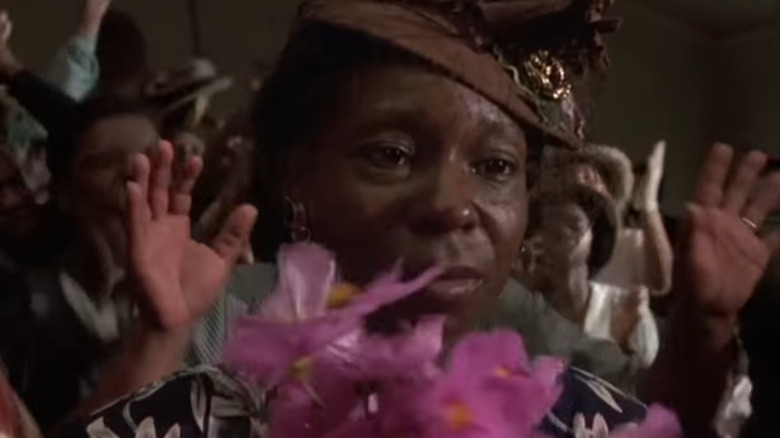
Alice Walker has deep spiritual beliefs. She feels that meditation is a way to help understand yourself and "get rid of a lot of stuff that y'all really don't need to continue carrying around with you" (via Beliefnet). She ofttimes works her beliefs into her works, though it'due south not always obvious to the coincidental reader. "'The Color Majestic' is near theology," she explained to Beliefnet, describing the book as a "Buddha volume that's not Buddhism." Confused? Buddha was once a prince, who plant enlightenment by searching for a way to bargain with the horrors and suffering of life. That's the same thing that Celie does.
"Many people assume that it'south nigh just about incest, wife corruption, spouse-beating," Walker explained. "All of that is in in that location, but you will detect that the journey that Celie is making is toward her cocky-realization equally a function of the entire Godness." But that didn't come through in the motion picture that Steven Spielberg directed. His vision and his focus were dissimilar. Walker notes in "The Same River Twice: Honoring the Difficult," that instead, Spielberg "was more interested in showing the transformation of Mister to Albert." So, the theology of the novel was lost in translation, and information technology became more than of a story of Albert's redemption than Celie's self-realization.
The film made Oscar history
"The Color Purple" was nominated for a remarkable xi awards at the 58th Annual University Awards in 1986. It seemed poised to clean upwards in every category, from Best Picture show and Actress to Best Costume Design and Makeup. The pic was getting the recognition it deserved. Until it wasn't. The movie didn't win in a single category for which it was nominated. This slew of losses tied it with a 1977 movie called "The Turning Signal" for the most nominations without winning (via The LA Times). "The Color Regal" should have been making history, but not like that.
Back in 1986, in that location was no social media to bring the gross inequality to low-cal in the same way that the hashtag #OscarsSoWhite did more recently — only that doesn't mean it went unnoticed. As the Los Angeles Times reported, the Hollywood-Beverly Hills chapter of the NAACP filed a alphabetic character of protest against the Academy, accusing them of racism. The Academy's response? It'south an honor to be nominated, and since the picture got xi nominations, there was clearly no racism.
The motion picture did fare better elsewhere. Whoopi Goldberg'due south performance won All-time Actress at the Golden Globes that twelvemonth, although the Hollywood Strange Press close the picture show out of its other four nominations. And despite the NAACP's conflicting feelings about the movie's portrayal of Blackness men, "The Color Purple" won Outstanding Motion Motion picture and Goldberg won Outstanding Extra at that year'south NAACP Prototype Awards.
There's a sequel (of sorts)
Open Road Media
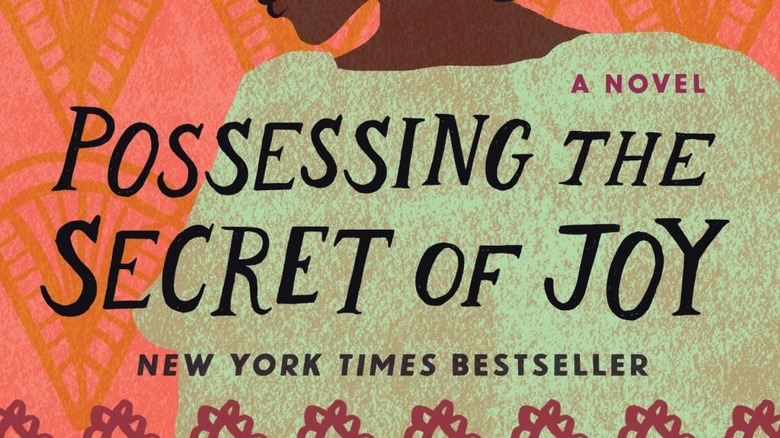
10 years after the publication of "The Color Purple," Alice Walker released a follow-upwards novel called "Possessing the Secret of Joy." It follows Tashi, a minor character of "The Color Purple." She's the adult female that Celie's son, Adam, marries while living in Africa. In the motion-picture show we barely get to see her, just in the original novel, she undergoes female person circumcision as a young woman before returning to the U.s.a. with Adam.
"Possessing the Hole-and-corner of Joy" follows the ramifications of that trauma: Tashi feels torn between two worlds and 2 cultures, and she goes mad afterward having the procedure done. Like "The Color Majestic," it is not an easy read, and information technology dealt with topics like female person genital mutilation long before the majority of Americans fifty-fifty had a clue what that was. Only that'south exactly why Walker wants to see it be her side by side work adapted from the page (via NBC News).
"[Possessing the Cloak-and-dagger of Joy is] the one that I would really like people to run into and think will be very good for the world actually to deal with," she told NBC News. "It's a wonderful story but it too has this reality at the foundation that if we don't deal with stopping the spread of disease, we lose so many more of our sisters and brothers in Africa and elsewhere." So, some solar day, if Walker has her manner, nosotros may see a sort of sequel to "The Color Imperial," rather than another remake.
armstrongpludenis.blogspot.com
Source: https://www.looper.com/793518/the-untold-truth-of-the-color-purple/
0 Response to "Funny Images for the Color Purple"
Post a Comment